Choosing within this department
Frame, fork & alignment tools
This department covers distinct workshop tasks, from retrieving an internal cable to checking alignment or preparing a specified fitting. Start by deciding whether the task is measurement, positioning, installation or material removal. Then match the exact contact and component instructions. Owning a suitable-looking tool does not establish that a frame or fork is repairable.
Separate measurement from correction
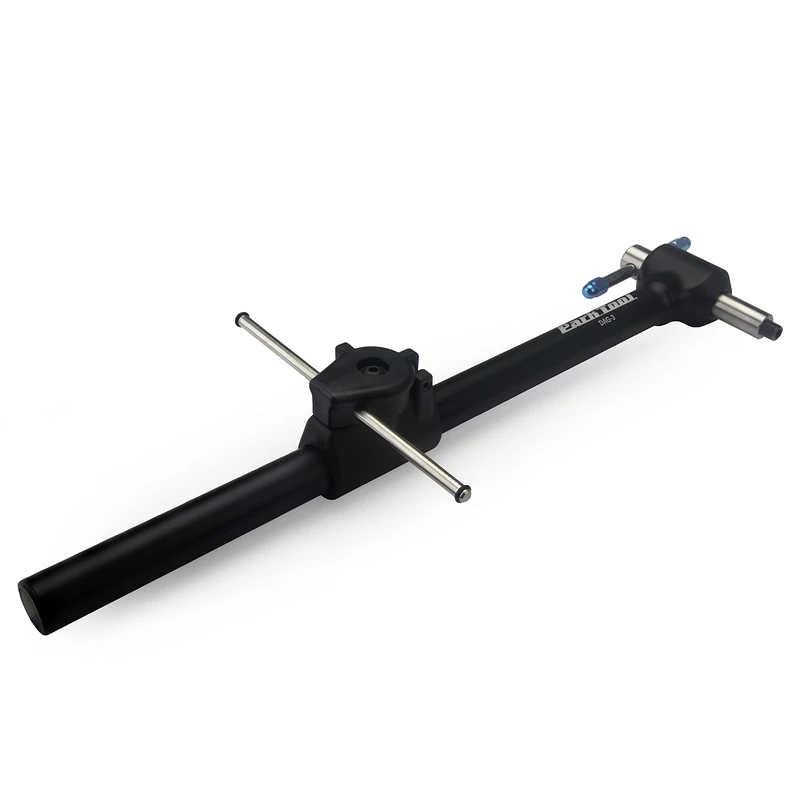
DAG-3 references the wheel rim from the derailleur hanger. FFG-2 instead checks supported frame and fork dropout parallelism and excludes thru axles. Choose the reference system that answers your actual question; these gauges do not measure the same feature.
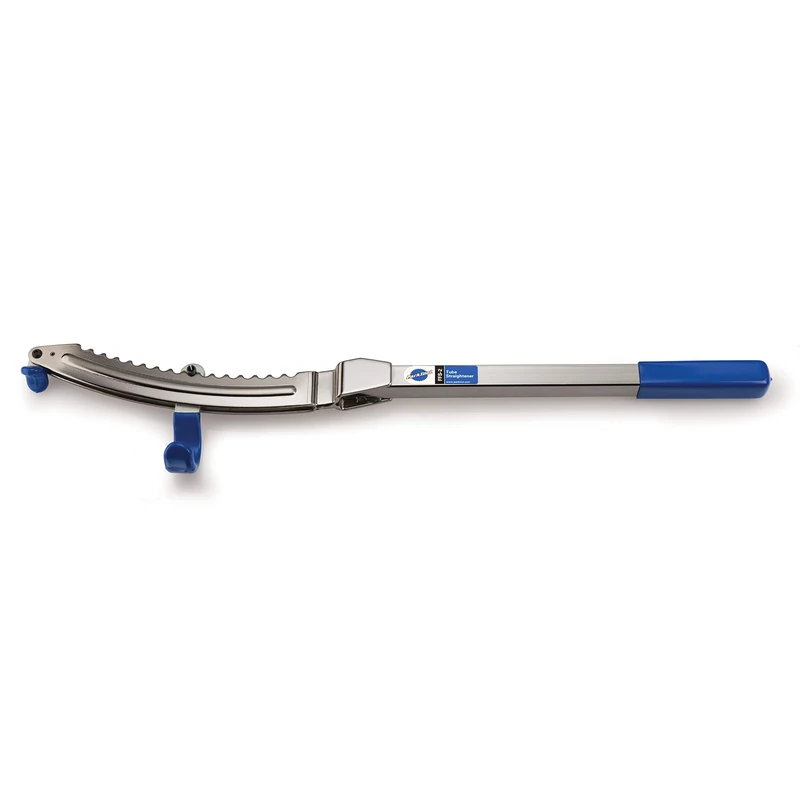
FFS-2 is a correction lever explicitly restricted to steel components. FFG-2’s permitted measurement on carbon dropouts is not permission to straighten them. Keep the component material and maker’s service limits ahead of the tool’s adjustment range when deciding whether a correction tool belongs in the workshop.
Check Specialist Frame-Tool Scope Before Buying ↗
Choose the retrieval system and connector fitting
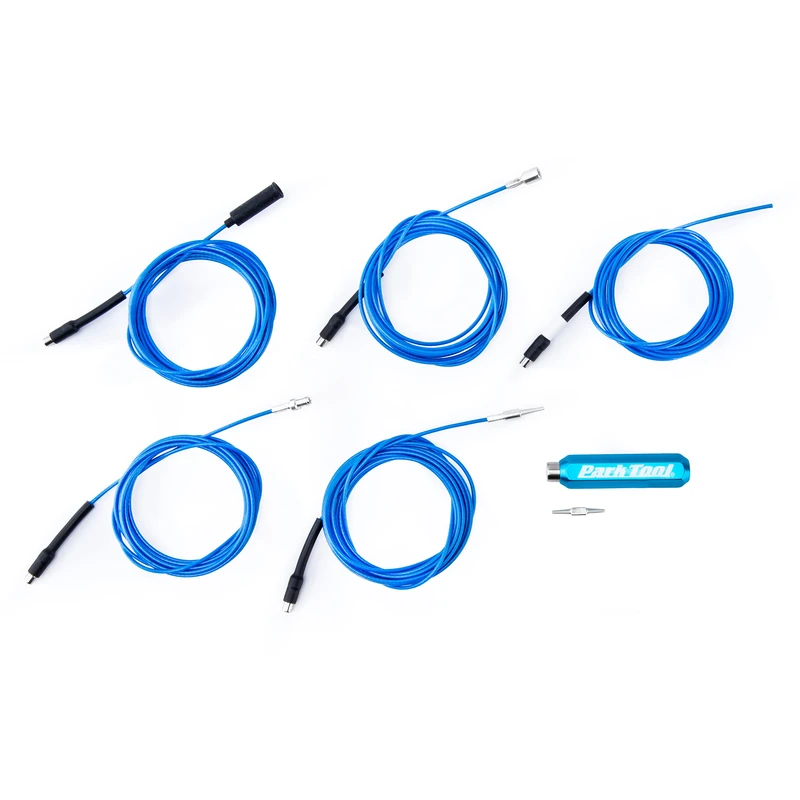
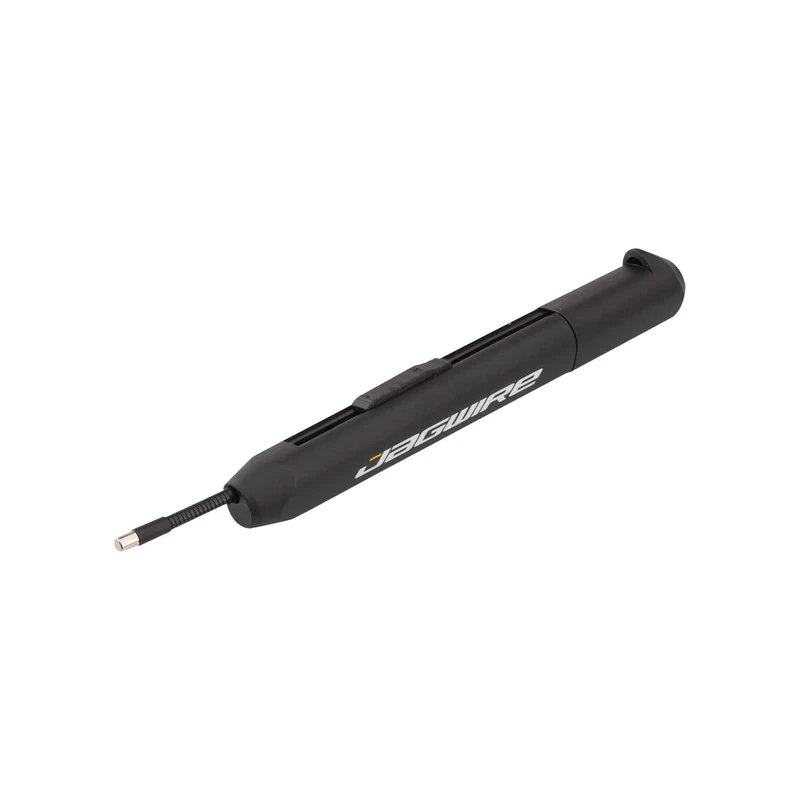
IR-1.3 includes five long guide cables with different fittings, including its named EW-SD300 adapter, plus a guide magnet, barb and case. Jagwire WST050 uses a retractable flexible-magnet retrieval arrangement with its own stored adapters. Compare the connector and passage needed, rather than treating every magnetic kit as equivalent.
A passage dimension stated for one adapter does not apply to every fitting in a kit. Establish which connector must pass through which opening. Hose cutting and insert installation remain separate jobs in the brake, cable and hose department.
Choose Cable, Hose, Insertion and Routing Tools by Operation ↗
Match the installation system before buying a guide
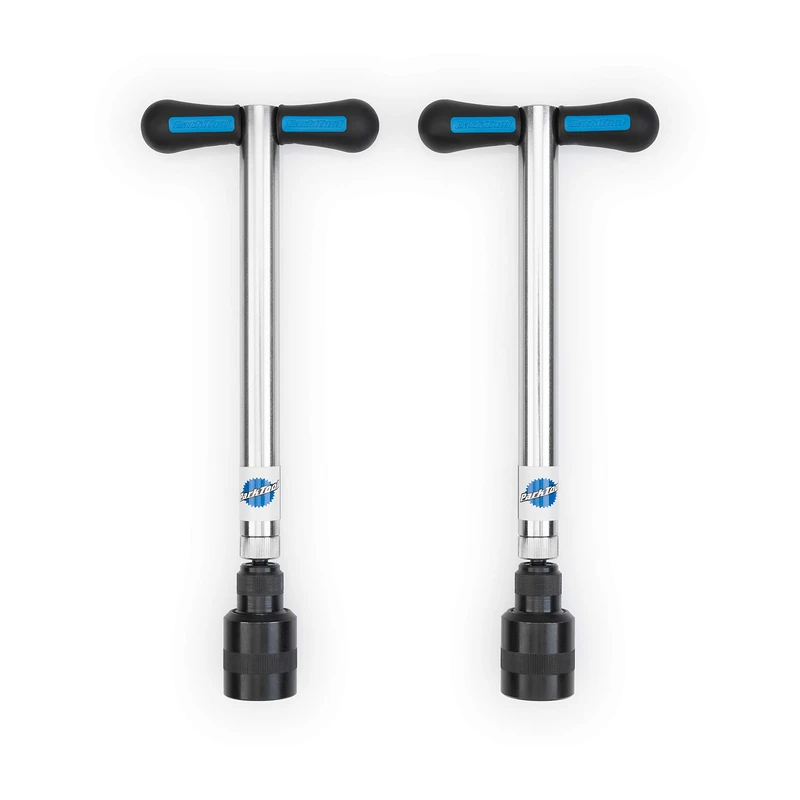
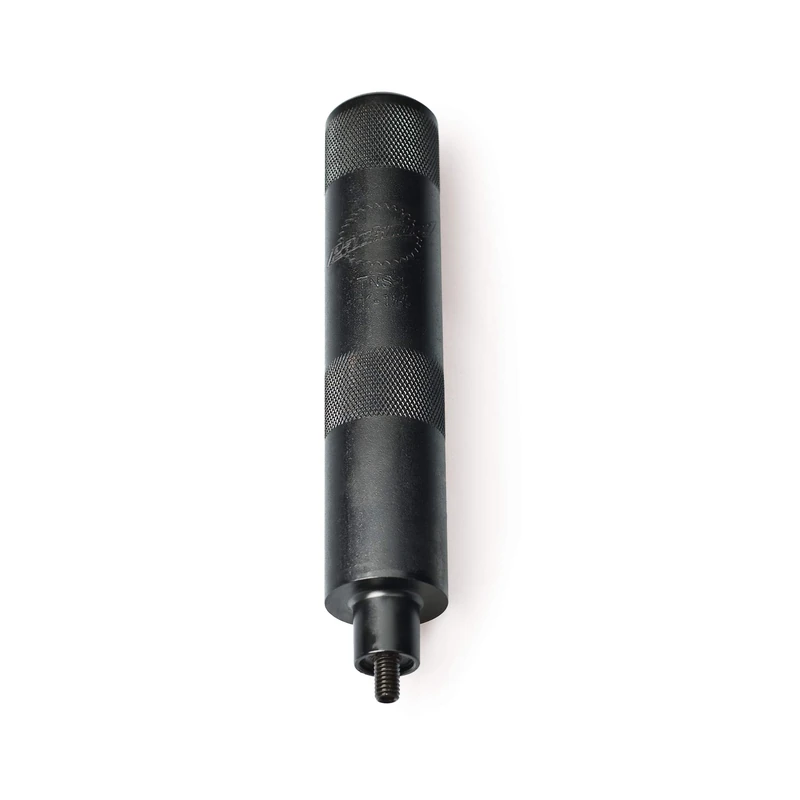
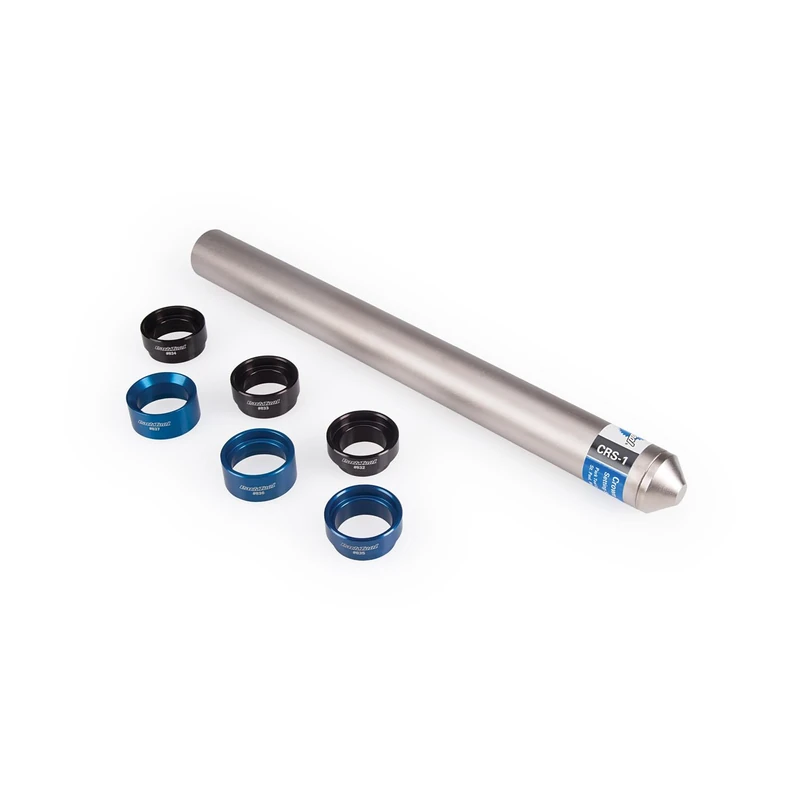
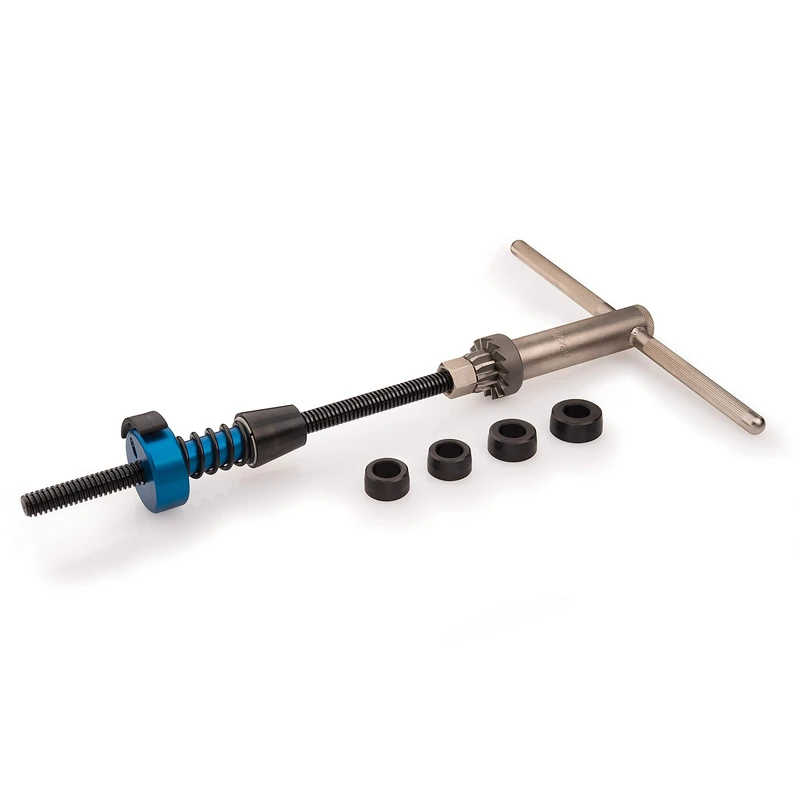
TNS-1 and guided TNS-4 address the named M6 star-nut systems. They do not install an expansion plug. CRS-1 supplies a crown-race setting tube and six drifts for its stated base and SHIS scope; the fork-column label alone does not identify the race contact.
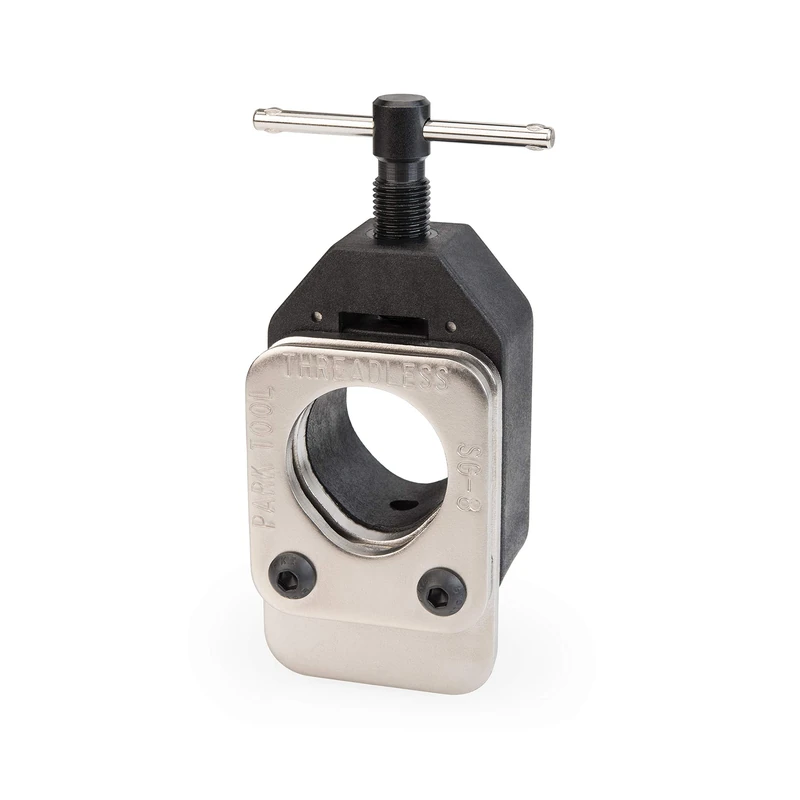
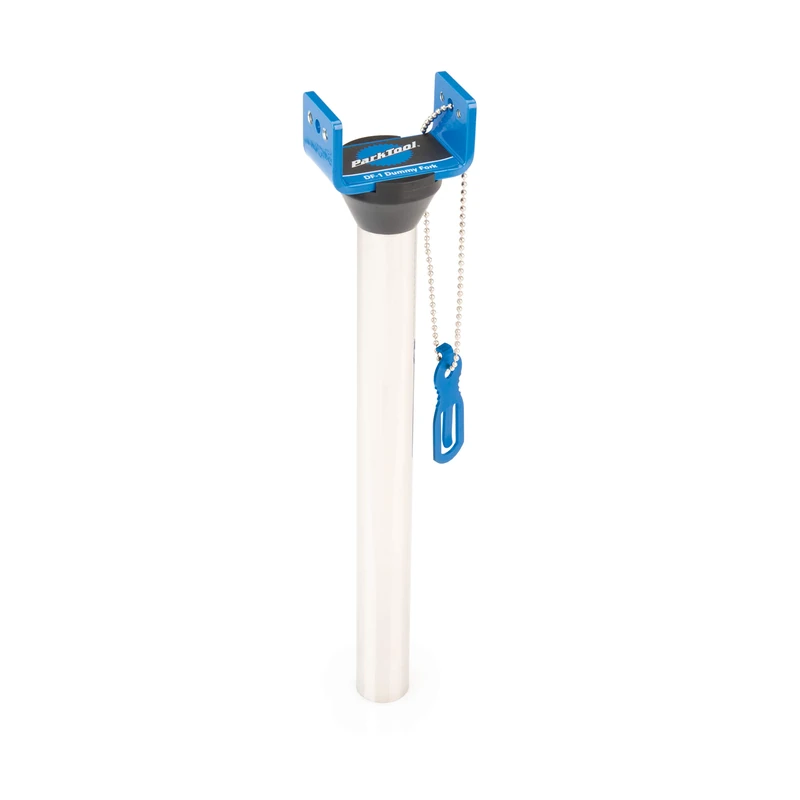
SG-8 is a saw guide for its stated tube and carbon-specific blade scope. Saw, blade and vise are separate, and fitting the guide does not authorize cutting every carbon component. DF-1 is a workshop dummy fork for organizing a supported repair setup, not a riding fork or the primary bicycle stand.
Choose Bearing, Crown-Race and Steerer Interfaces as a System ↗
Read the stock set rather than the whole accessory family
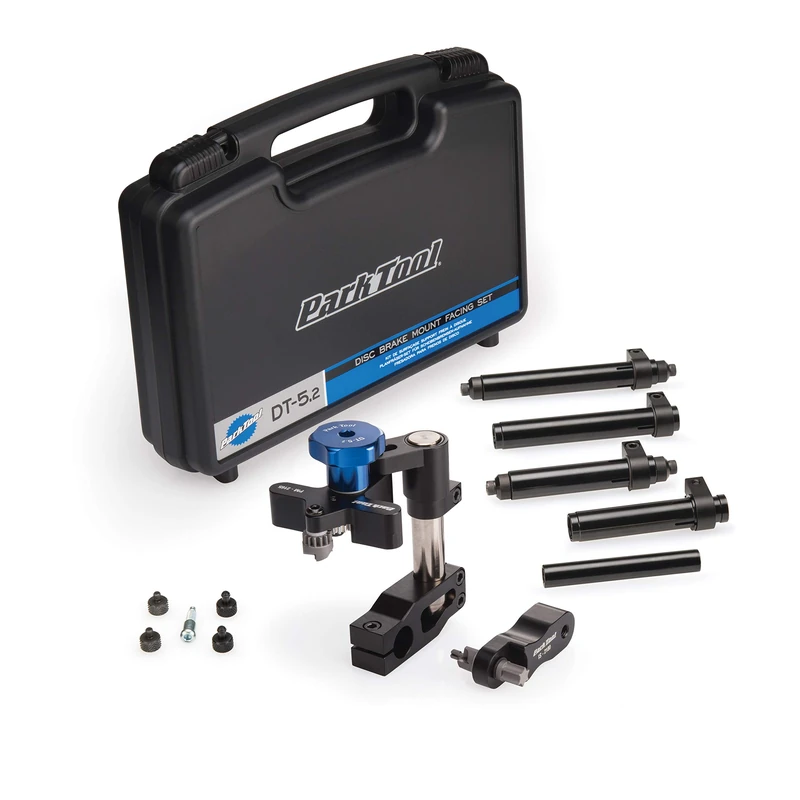
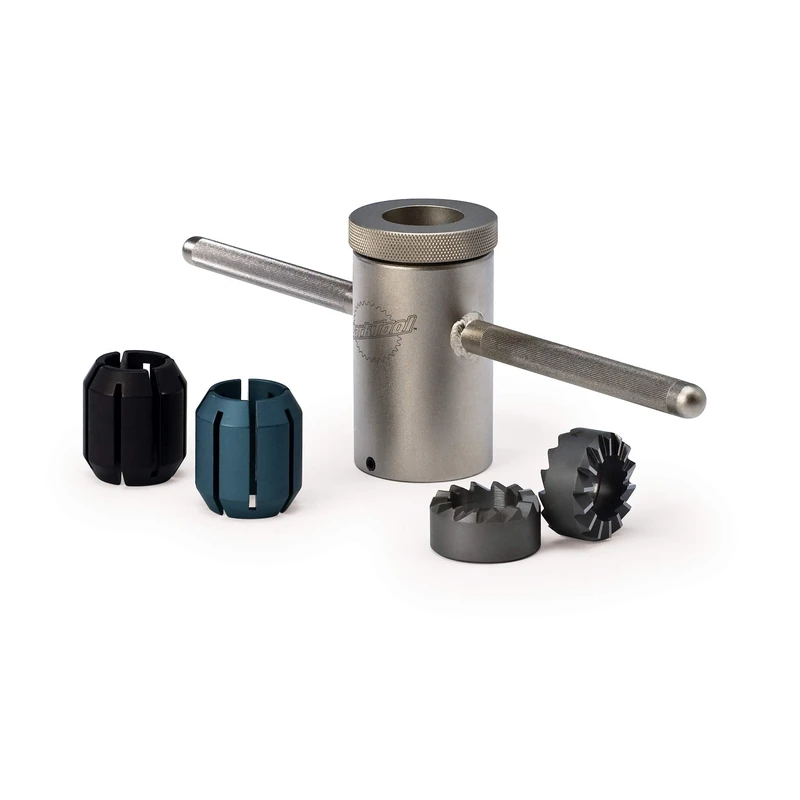
DT-5.2 supplies its stated axle adapters and cutters; the recommended 2197 carbon abrasive adapter is separate. HTR-1B’s supplied reamer, facer and pilots establish a narrower stock scope than every application possible with optional family tooling. CRC-1 has its own crown-race-seat cutters and is marked discontinued by the maker, which is not a claim about the selected Amazon offer’s stock.
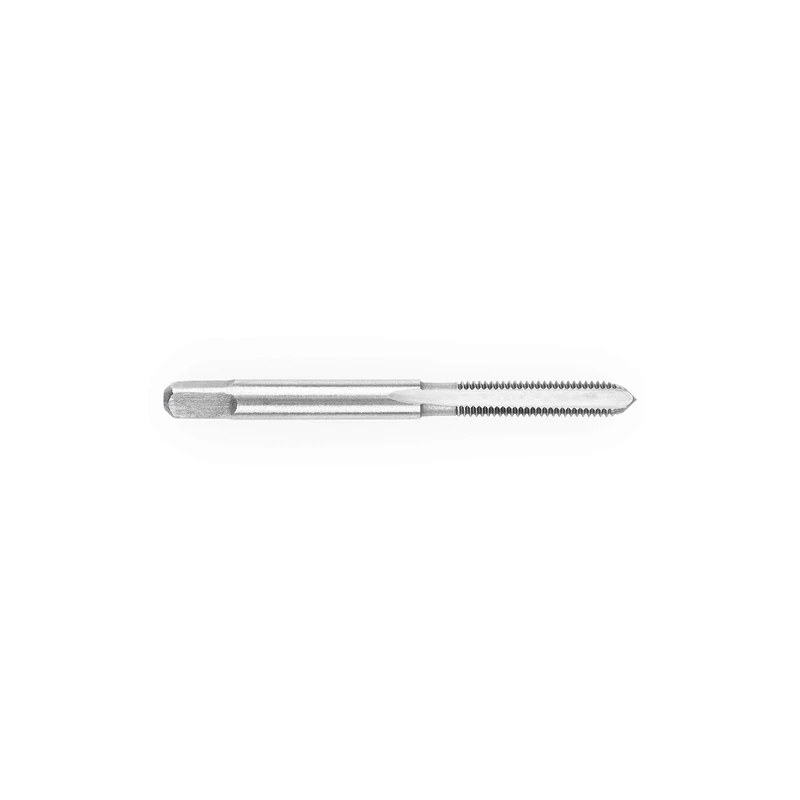
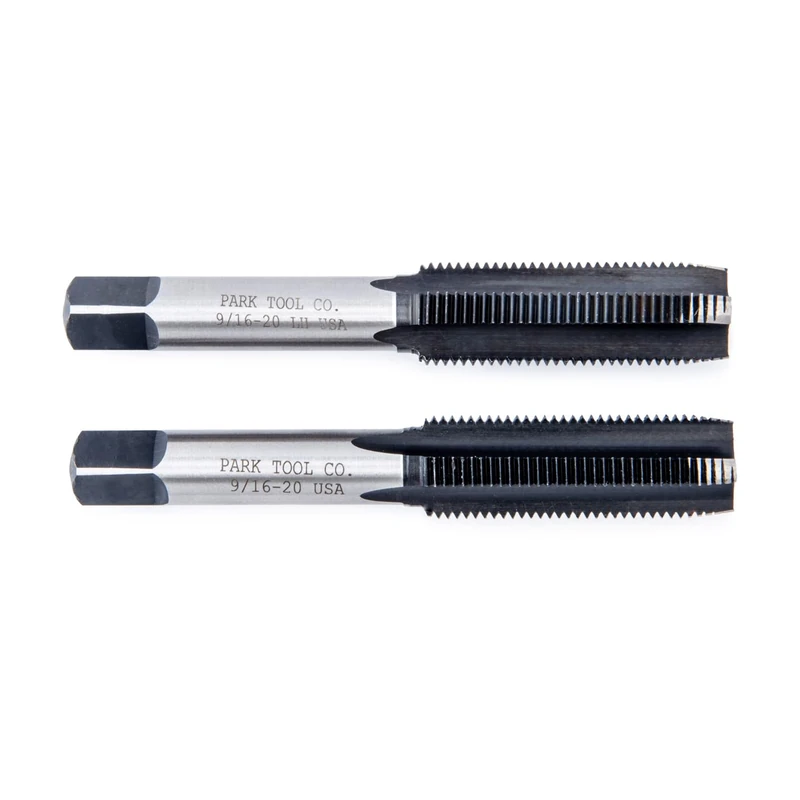
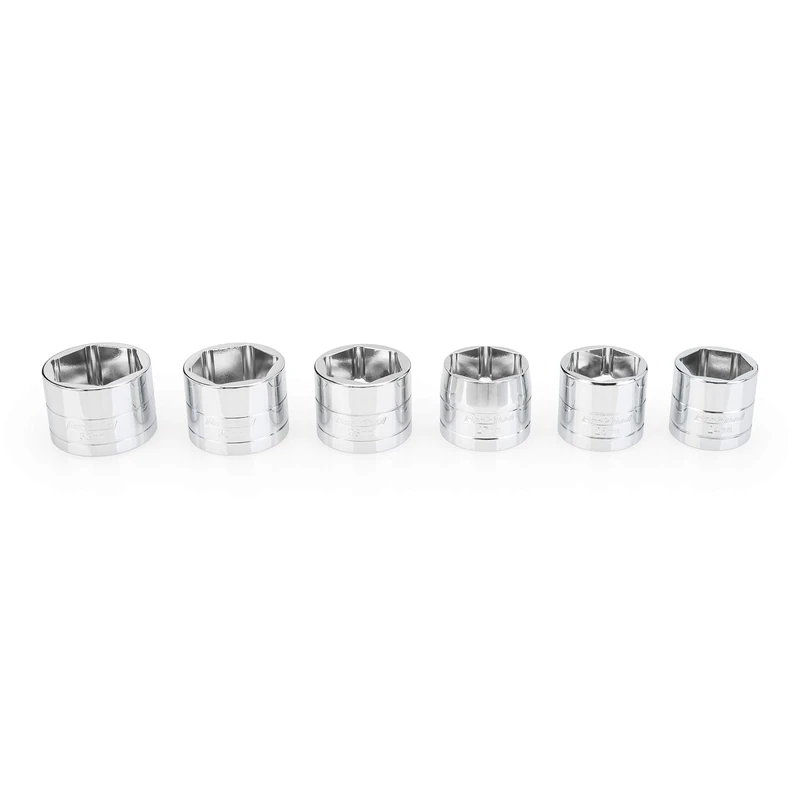
For threaded contacts, TAP-8 is M5 × 0.8 while TAP-6 supplies right- and left-hand 9/16–20 pedal taps. Correct thread labels do not prove that damaged material can be recovered. FCT-1 and the six flat-faced SKT-6 sockets address their particular cap profiles; neither establishes every cap from a named suspension brand or permission for impact driving.
Check Specialist Frame-Tool Scope Before Buying ↗ · Choose a Torque Range, Indication and Usable Bit Set ↗
Questions before you choose
Can an alignment gauge tell me a carbon frame can be straightened?
No. FFG-2’s permitted measurement and FFS-2’s steel-only correction scope are separate. A measurement does not authorize repair or establish the component’s condition.
Which routing kit should I compare for EW-SD300?
IR-1.3 names an EW-SD300 fitting. Still check the actual connector and passage. Do not transfer this compatibility to Jagwire WST050 without its own exact-generation support.
Does a star-nut setter replace a crown-race setter?
No. TNS-1 and TNS-4 position supported star nuts. CRS-1 contacts a supported crown race. Identify the fork’s retention system and the actual installation task first.
How should I compare a facing set with many optional accessories?
Start with the cutters, pilots and adapters actually supplied for the selected model. Add an accessory only when its exact application and component approval are established; the widest family description is not the contents of the box.
Continue your selection
Buying guide ↗Check Specialist Frame-Tool Scope Before Buying
Distinguish diagnosis, permitted correction and material removal, then compare the actual stock cutters, pilots, sockets and taps.
Buying guide ↗Choose Cable, Hose, Insertion and Routing Tools by Operation
Build a brake-line tool list from material, fitting and frame passage, comparing dedicated cutters with combined preparation tools.
Buying guide ↗Choose Bearing, Crown-Race and Steerer Interfaces as a System
Separate removal from installation, identify the force contact and check which press, drift or guide is actually supplied.
Buying guide ↗Choose a Torque Range, Indication and Usable Bit Set
Compare measuring range, direction and fastener access before judging a set by bit count or a ratchet-strength figure.
Compare the exact component and selected offer with its maker’s requirements. These are buying comparisons, not a hands-on repair test.